
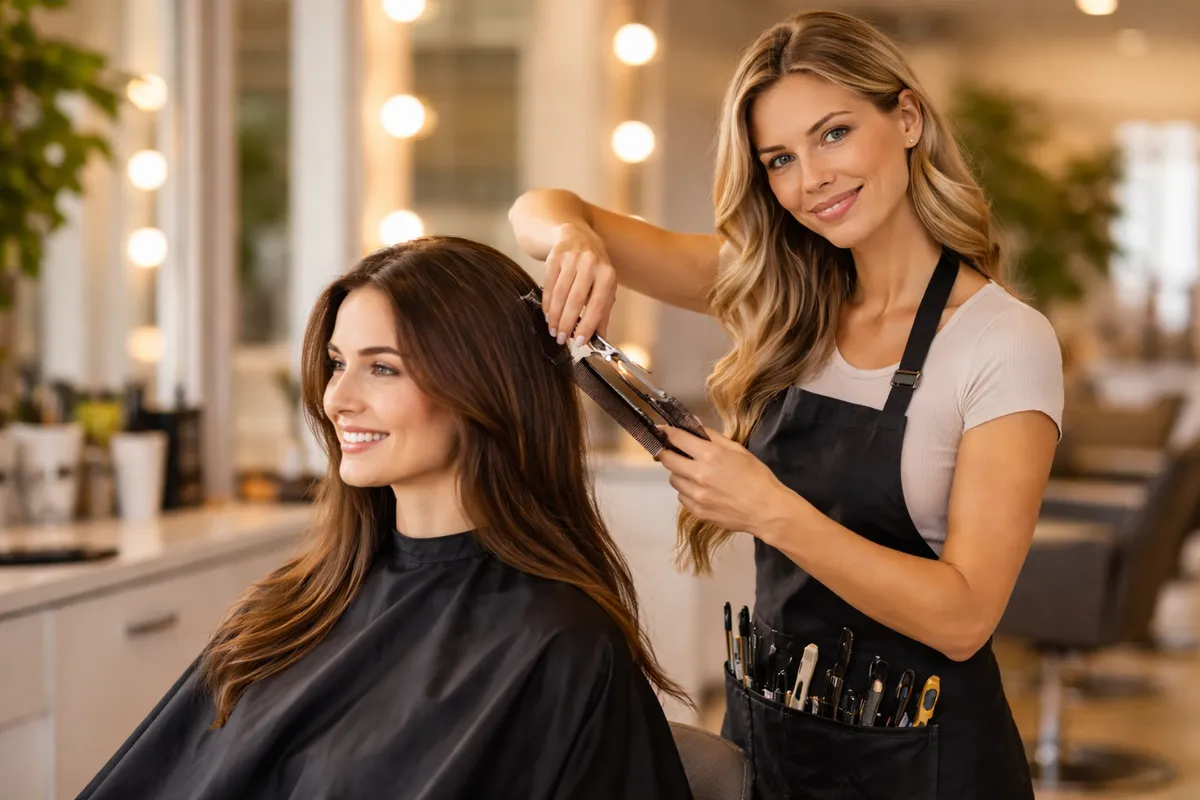
Salon laws in the United States generally regulate who may perform cosmetology services, where those services may be offered, and how establishments must protect customers from avoidable health risks. The details vary by state, so owners need to follow their own licensing board’s rules rather than assuming practices permitted elsewhere are automatically legal.
How Salon Licensing Requirements Work
Most states regulate both cosmetology professionals and the establishments where licensed services are performed. Requirements can include individual practitioner credentials, establishment licensing, inspections, renewal deadlines, and restrictions on the services permitted under a particular license.
Pennsylvania, for example, requires salons to apply for licensure and pass inspection before operating. Its State Board of Cosmetology regulates cosmetologists, estheticians, nail technicians, and several categories of salons.
Owners following regional regulatory developments may encounter Florida business coverage alongside government announcements, but the controlling requirements should always be confirmed through the responsible licensing agency.
Sanitation Is an Operating Requirement
Cleaning isn’t simply a matter of appearance. State rules commonly address disinfection of reusable instruments, separation of clean and contaminated supplies, hand hygiene, water facilities, and general cleanliness.
Ohio law, for example, requires licensed salons to have potable hot and cold running water, proper drainage, the ability to disinfect instruments, sanitary premises, and proper ventilation. Ohio’s infection-control rules also require used equipment to remain separate from clean items until it has been properly cleaned and disinfected.
| Compliance Area | Typical Requirement | Business Concern |
|---|---|---|
| Licensing | Valid salon and practitioner credentials | Unlicensed operation |
| Instruments | Cleaning and disinfection | Infection exposure |
| Facility | Water, drainage and sanitation | Failed inspection |
| Records/notices | Required postings or documents | Regulatory violations |
License Display and Customer-Facing Rules
A valid license may have to be displayed rather than kept in an office drawer. Ohio currently requires a salon operating license to be displayed in a public and conspicuous place, and infection-control standards must also be posted.
Requirements differ among jurisdictions, which is why owners researching Pennsylvania industry updates should separate general business reporting from legally controlling board rules.
Customer protection can also involve required notices, complaint information, sanitation disclosures, and limitations on which services may be offered under a facility’s license.
Worker Safety Can Create Separate Duties
State cosmetology rules are only part of salon compliance. Federal workplace requirements can become relevant when employees handle chemicals or experience occupational exposure.
The Occupational Safety and Health Administration provides specific guidance concerning formaldehyde exposure from some hair products. Depending on exposure conditions, applicable OSHA standards may require measures such as hazard communication, air monitoring, protective procedures, and medical attention for affected workers.
Salon owners reading Ohio regional business reporting should therefore remember that a state cosmetology license does not replace federal workplace responsibilities.
Where Salon Owners Commonly Go Wrong
A frequent mistake is treating the salon license as a complete compliance package. It isn’t. A business may also need local zoning approval, occupancy clearance, tax registration, worker-safety compliance, and individual practitioner licensing.
Another problem is assuming every cleaning product qualifies as an acceptable disinfectant. Boards may prescribe specific infection-control procedures. Owners should maintain written routines for reusable tools, linens, workstations, containers, and contaminated materials instead of relying on informal habits.
When Should Legal or Regulatory Help Be Considered?
Professional guidance may be appropriate when a salon receives an inspection citation, licensing complaint, suspension notice, customer injury claim, worker-safety complaint, or allegation that services were performed outside the permitted scope of practice.
Before opening or expanding services, owners should check the licensing board, local government, and relevant workplace authorities. That is especially important when adding services such as nail care, esthetics, permanent cosmetics, massage, or other work governed by separate credentials.
Frequently Asked Questions
Do salon licenses apply nationwide?
No. Cosmetology regulation is primarily state based, and local requirements may also apply. A license issued in one jurisdiction does not automatically authorize a salon or practitioner to operate elsewhere.
Can a salon operate before its inspection?
It depends on state law. Pennsylvania expressly states that a salon applying for licensure cannot operate before successfully completing the required inspection.
Who is responsible for sanitation violations?
Responsibility depends on local rules. Some jurisdictions impose duties on both facility owners and individual licensees. Ohio, for example, assigns responsibility for common areas to owners and service areas to practitioners using them.
Build Compliance Into Daily Operations
A salon stays compliant through more than a license renewal every few years. Owners need routines covering credentials, sanitation, employee safety, required postings, inspections, and changes in permitted services.
Because salon laws differ substantially between jurisdictions, the safest operational approach is to check the current rules of the state board and local authorities whenever the business changes location, ownership, staffing, or service offerings.
This article provides general legal information and is not a substitute for advice from a qualified attorney or the applicable licensing authority.