
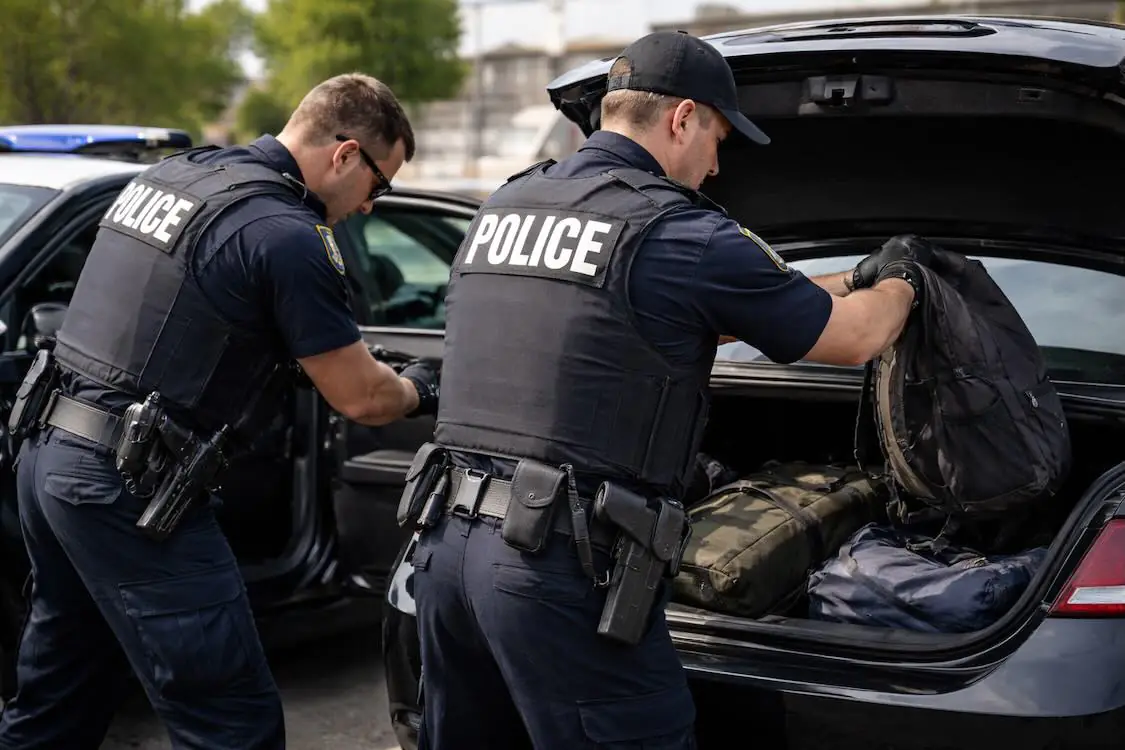
Search warrant laws limit when government officers may enter protected places, search property, and seize evidence. In the United States, the Fourth Amendment requires warrants to rest on probable cause and to particularly describe the place to be searched and the persons or things to be seized. Those requirements are meant to prevent broad, exploratory searches.
State constitutions and statutes may add protections, while federal investigations follow federal constitutional standards and procedural rules. The details therefore depend on which agency is acting, what is being searched, and whether an exception to the warrant requirement applies.
What Does Police Need to Obtain a Search Warrant?
A warrant generally begins with facts presented to a judge or magistrate. The information must support probable cause rather than a bare conclusion that criminal evidence might exist somewhere. Federal Rule of Criminal Procedure 41 permits a magistrate judge to issue a warrant after receiving an affidavit or other information establishing probable cause.
Probable cause is practical and fact-dependent. It does not require proof beyond a reasonable doubt, but officers must provide enough information for a neutral judicial officer to make an independent decision.
Readers researching legal processes online may also encounter general-interest publications such as regional online coverage. Such material should not replace statutes, court rules, or qualified legal advice when a real search is involved.
What Must the Warrant Describe?
The particularity requirement limits the scope of the authorized search. A warrant should identify the place or property to be searched and what officers are authorized to seize. The Constitution Annotated explains that this requirement is intended to prevent general searches that leave officers with unrestricted discretion.
Federal Rule 41 also contains execution requirements. For an ordinary federal search warrant, the rule generally directs execution within a period specified by the warrant that cannot exceed 14 days and normally during daytime hours unless the judge authorizes otherwise for good cause.
| Issue | Typical Rule | Why It Matters |
|---|---|---|
| Probable cause | Facts support the search | Limits unsupported searches |
| Particularity | Place and items identified | Restricts search scope |
| Execution | Warrant follows stated terms | Controls police authority |
| Seizure | Property must be lawfully taken | May affect admissibility |
For broader reading, people may encounter sites such as local news and commentary, but the controlling rules in a U.S. criminal case come from applicable constitutional law, statutes, procedural rules, and judicial decisions.
Can Police Search Without a Warrant?
Yes. The Fourth Amendment does not require a warrant for every government search. Courts recognize several exceptions, although each has its own boundaries.
Examples can include valid consent, certain searches connected to an arrest, exigent circumstances, and some automobile searches. A search incident to a lawful arrest can permit officers to search the arrested person and, under applicable limits, areas connected with the arrest.
General web destinations such as community-focused online material may help readers encounter legal topics, but determining whether an exception actually applies requires attention to the facts and controlling jurisdiction.
What People Often Misunderstand About Search Warrants
A warrant does not give officers unlimited authority to search everything they encounter. Its language and the legal rules governing execution matter.
It is also incorrect to assume that evidence found outside the warrant can never be seized. For example, the plain-view doctrine can sometimes permit seizure of incriminating evidence officers lawfully observe while carrying out a valid search. Conversely, having a signed warrant does not automatically resolve every Fourth Amendment question if the warrant or its execution is legally defective.
When Legal Help May Be Important
Questions about search warrants can become time-sensitive when property has been seized, criminal charges are possible, electronic devices contain sensitive information, or a person believes officers exceeded the authorized scope.
A criminal defense lawyer can examine the warrant, affidavit where accessible, manner of execution, applicable exceptions, and possible challenges to evidence. The federal framework is summarized in Federal Rule of Criminal Procedure 41, but state search-and-seizure rules can differ.
Frequently Asked Questions
Can police search my entire house with a search warrant?
Not automatically. The warrant’s description and the objects officers are authorized to seek affect where they may search. A search for a large object, for example, raises different scope questions from a search for small records or digital evidence.
Does a search warrant mean someone will be arrested?
No. A search warrant authorizes a search or seizure under specified conditions. Whether an arrest follows depends on the evidence, applicable law, and whether officers have legal grounds to arrest a particular person.
Can a search warrant cover phones and computers?
Yes, digital devices can fall within search-warrant procedures, but searches of electronic information raise additional scope and particularity issues. Federal Rule 41 expressly treats information as property for purposes of the rule.
Review the Warrant and the Facts Carefully
A search warrant is a limited judicial authorization, not a blank check. Probable cause, particularity, execution, and recognized exceptions can all affect whether a search was lawful. Anyone directly affected by a search or property seizure should preserve relevant paperwork and consider obtaining jurisdiction-specific legal advice before making assumptions about what officers were permitted to do.
This article provides general legal information and is not a substitute for advice from a qualified attorney.